

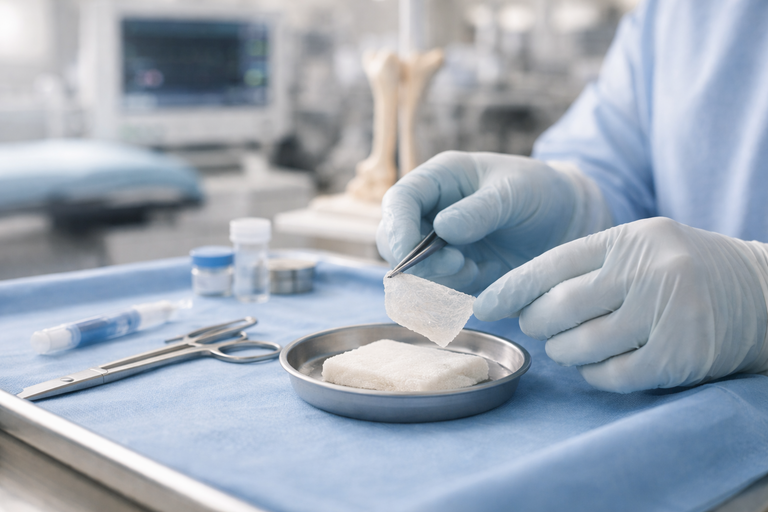
In modern medicine, grafts are transforming the way patients heal after surgery or injury. These tissue-based implants bridge the gap between science and compassion, allowing surgeons to restore function, mobility, and quality of life. As a biotechnology leader, Pinnacle Transplant Technologies stands at the forefront of this transformation, offering high-quality allograft implants that are changing the standard of care for thousands of patients.
Understanding What Grafts Are
A graft is biological tissue transplanted to repair or replace damaged areas in the body. Depending on the clinical need, grafts can come from human donors, the patient’s own body, or even synthetic materials. Tissue banks like Pinnacle Transplant Technologies focus on processing and distributing human allografts that meet rigorous safety and ethical standards.
Grafts play a vital role across medical fields including orthopedics, dental surgery, sports medicine, trauma care, and regenerative medicine. Their purpose is not only to replace lost tissue but to stimulate natural healing responses that restore normal function.
The Science Behind Modern Grafts
Biotechnology has dramatically improved the quality, reliability, and performance of grafts. Through advanced processing methods, tissues are cleaned, preserved, and sterilized while maintaining their structural integrity. This ensures that grafts integrate smoothly into the recipient’s body and support long-term healing.
Techniques like cryopreservation and lyophilization (freeze-drying) have made it possible to store grafts for extended periods without losing biological properties. These innovations allow surgeons to access ready-to-use grafts whenever needed, especially in urgent trauma or reconstructive cases.
According to the U.S. Food and Drug Administration (FDA), all human tissue used for transplantation must meet strict safety standards to protect both donors and recipients. This regulatory framework ensures that each graft undergoes thorough testing for sterility, traceability, and compatibility.
How Grafts Improve Healing and Recovery
Restoring Functionality
Grafts provide structural support to damaged tissues and bones. In orthopedic and spinal surgeries, for example, grafts act as scaffolds that allow new bone cells to grow and connect. Over time, the graft naturally integrates with the body, restoring strength and mobility.
Accelerating Recovery
Patients who receive high-quality grafts often experience faster recovery times because the grafts reduce the need for secondary surgeries. Instead of relying on artificial implants or lengthy reconstruction processes, surgeons can use biologically compatible tissue that promotes natural regeneration.
Minimizing Complications
Modern graft processing significantly lowers infection risks and rejection rates. Tissue banks like Pinnacle Transplant Technologies employ advanced sterilization techniques to preserve tissue quality while ensuring safety. The result is a lower likelihood of post-surgical complications and a smoother recovery journey for patients.
Expanding Treatment Options
From ligament reconstruction to dental regeneration, graft technology offers surgeons a wide range of solutions. Each graft type is designed to address specific medical challenges, providing customized options for both complex and routine procedures.
The Role of Biotechnology in Graft Innovation
Biotechnology continues to expand what is possible with grafts. Scientists now combine biological materials with growth factors, stem cells, and bioactive coatings to enhance healing responses. These bioengineered grafts mimic the body’s natural tissues more closely, leading to stronger and faster regeneration.
According to the National Institutes of Health, regenerative medicine and tissue engineering are key drivers behind new graft technologies that improve patient recovery outcomes. Research in this field has led to new applications for grafts in cartilage repair, dental bone regeneration, and soft tissue reconstruction.
Ethical and Quality Standards in Graft Development
Every graft begins with a generous donation, which is why ethical handling and donor respect are at the heart of tissue banking. Pinnacle Transplant Technologies follows strict ethical guidelines and quality protocols to ensure that each graft honors the donor’s gift while maximizing its healing potential.
This includes thorough donor screening, documented traceability, and compliance with both FDA and American Association of Tissue Banks (AATB) standards. Such dedication to integrity builds trust with surgeons and provides peace of mind for patients and families.
Partnering for Better Patient Outcomes
The success of graft-based recovery depends on close collaboration between tissue banks, medical professionals, and healthcare institutions. Pinnacle Transplant Technologies partners with surgeons to ensure that every graft meets specific procedural and clinical needs.
Through ongoing education and research, Pinnacle supports medical professionals in adopting the most effective graft technologies. This partnership ensures that every transplant not only meets safety and performance requirements but also helps patients return to healthy, active lives faster.
Frequently Asked Questions
1. What types of grafts are used in medicine?
Common types include bone, soft tissue, cartilage, and dental grafts, each serving a specific role in tissue repair and regeneration.
2. How do grafts speed up recovery?
They provide biological support that stimulates natural tissue growth, reducing the need for synthetic implants or secondary procedures.
3. Are grafts safe for patients?
Yes. Reputable tissue banks follow FDA and AATB standards to ensure each graft is fully tested, sterilized, and traceable.
4. How does biotechnology improve graft quality?
Advanced biotechnology enhances sterilization, preservation, and bioactivity, allowing grafts to integrate faster and perform better.
5. Why choose Pinnacle Transplant Technologies for graft solutions?
Pinnacle combines ethical sourcing, scientific excellence, and clinical collaboration to deliver reliable, high-quality allografts that improve patient recovery.
Conclusion
The evolution of graft technology is revolutionizing patient recovery by combining science, ethics, and compassion. With biotechnology-driven advancements, faster healing, and reduced risks, grafts are paving the way for a new era of regenerative medicine.For over a decade, Pinnacle Transplant Technologies has been dedicated to improving lives through safe, ethical, and innovative graft solutions—honoring every donation by transforming it into hope and healing for patients across the nation.


Leave a Reply