

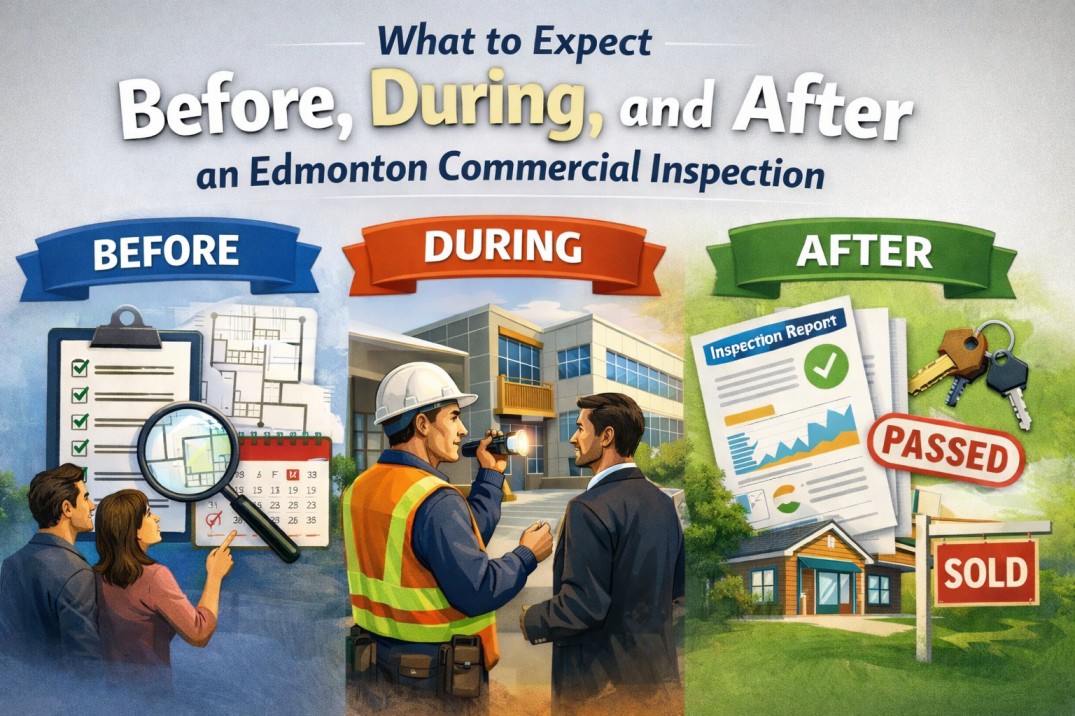
Investing in commercial property is a major financial decision. Whether you’re purchasing an office building, retail space, warehouse, or industrial facility, a professional Edmonton commercial inspection helps protect your investment and reduce risk.
In Alberta’s competitive commercial real estate market, knowing what happens before, during, and after the inspection ensures you’re prepared and confident in your next steps. Here’s a detailed breakdown of the entire process.
Before an Edmonton Commercial Inspection
Preparation ensures the inspection is thorough and efficient.
Confirm Scope and Professional Standards
A reputable Edmonton commercial inspection follows recognized industry standards, including provincial safety regulations and professional inspection guidelines.
Commercial building compliance in Alberta falls under provincial safety legislation. According to the official information provided by the Government of Alberta’s Safety Codes system, commercial properties must meet specific building, electrical, plumbing, and fire standards.
Understanding the inspection scope helps clarify what will be reviewed, such as:
- Roof systems
- Structural components
- Exterior and foundation
- Plumbing systems
- Electrical panels and distribution
- HVAC systems and controls
- Interior components
- Attic and insulation
- Fire alarm and life safety systems
Advanced inspections may also include thermal imaging and moisture detection technology to identify hidden defects.
Gather Property Documentation
Before your Edmonton commercial inspection, collect relevant documentation:
- Building permits
- Maintenance records
- Renovation history
- Equipment warranties
- Previous inspection reports
This documentation allows inspectors to cross-reference current conditions with past upgrades or repairs.
Ensure Full Property Access
Inspectors must have unrestricted access to:
- Electrical rooms
- Roof access points
- Mechanical systems
- Crawlspaces
- Utility shut-offs
- Tenant-occupied areas (if applicable)
Limited access can delay or restrict the effectiveness of your Edmonton commercial inspection.
During an Edmonton Commercial Inspection
Commercial inspections are systematic and comprehensive. Due to the scale and complexity of commercial buildings, evaluations are more detailed than residential inspections.
Exterior and Structural Review
The inspection typically begins outside. Key areas assessed include:
- Foundation integrity
- Exterior cladding and walls
- Drainage systems
- Parking areas and walkways
- Roof condition
Alberta’s freeze-thaw climate can stress exterior systems. A professional Edmonton commercial inspection identifies cracking, settlement, and water intrusion risks before they escalate.
Roofing Assessment
Roof systems are one of the most expensive commercial components. Inspectors evaluate:
- Membrane condition
- Drainage efficiency
- Flashing integrity
- Signs of ponding water
- Leak indicators
Infrared scanning may be used to detect moisture trapped beneath roofing materials.
Electrical System Evaluation
Electrical systems are critical in commercial properties. During an Edmonton commercial inspection, inspectors assess:
- Main electrical service capacity
- Breaker panels
- Load balancing
- Fire alarm interfaces
- General code compliance
Electrical requirements in Canada are governed by the Canadian Electrical Code, which is explained in detail in this Wikipedia overview of the Canadian Electrical Code.
Outdated or improperly installed electrical systems can pose serious safety and liability concerns.
Plumbing and Mechanical Systems
Inspectors review:
- Water supply lines
- Drainage systems
- Water heaters and boilers
- HVAC systems
- Ventilation and controls
Given Alberta’s cold winters, heating system performance is especially important. A thorough Edmonton commercial inspection ensures HVAC systems operate safely and efficiently.
Interior Systems and Finishes
Inside the building, inspectors examine:
- Walls and ceilings
- Doors and windows
- Flooring
- Moisture intrusion
- Fire separation assemblies
Moisture meters and thermal imaging tools can detect hidden water damage behind finished surfaces.
Life Safety and Code Considerations
Commercial properties must comply with occupancy and fire safety standards. Inspectors check:
- Fire alarm systems
- Emergency lighting
- Exit signage
- Electrical/fire compliance issues
These elements are essential for insurance approval and regulatory compliance in Alberta.
After an Edmonton Commercial Inspection
Once the inspection concludes, you receive the most valuable asset of the process: your detailed report.
Comprehensive Inspection Report
A professional Edmonton commercial inspection report includes:
- Identified deficiencies
- Safety concerns
- Repair recommendations
- Maintenance suggestions
- Clear photographic evidence
This report becomes a powerful negotiation and planning tool.
Budgeting and Risk Management
With inspection findings in hand, property owners can:
- Renegotiate purchase terms
- Request seller repairs
- Plan capital improvements
- Schedule preventative maintenance
Rather than facing unexpected repair bills later, the inspection allows for strategic financial planning.
Added Protections and Warranties
Some professional inspection services offer additional protections such as:
- Limited warranties
- Sewer line coverage
- Roof leak protection
- Appliance recall verification
- Buy-back guarantees
These added benefits enhance the value of a thorough Edmonton commercial inspection.
Moving Forward with Confidence
After reviewing the report, your next steps may include:
- Proceeding with the purchase
- Negotiating pricing adjustments
- Scheduling specialized follow-up evaluations
- Planning phased improvements
The purpose of an Edmonton commercial inspection is not to derail a transaction but to ensure transparency and informed decision-making.
Why Professional Expertise Matters
Commercial inspections require extensive knowledge of structural systems, fire safety requirements, electrical infrastructure, and HVAC performance.
Working with experienced, licensed, and insured professionals ensures your Edmonton commercial inspection aligns with Alberta regulations and industry best practices.
When your investment involves hundreds of thousands — or millions — of dollars, expertise makes all the difference.
Final Thoughts
A professional Edmonton commercial inspection is one of the most important steps in commercial property ownership in Alberta.
By understanding what happens before, during, and after the process, you minimize uncertainty and protect your investment. From roofing systems to electrical panels, every component matters.
Preparation leads to clarity.
Clarity leads to confidence.
Confidence protects your bottom line.
Frequently Asked Questions (FAQ)
How long does an Edmonton commercial inspection take?
Depending on building size and complexity, an Edmonton commercial inspection may take several hours to a full day. Larger industrial facilities may require additional time.
Is an Edmonton commercial inspection mandatory in Alberta?
While not always legally required, lenders and insurers commonly recommend a professional Edmonton commercial inspection before closing a transaction.
What systems are included in an Edmonton commercial inspection?
Most inspections include roofing, structure, plumbing, electrical, HVAC, interior systems, exterior components, and life safety systems.
How much does an Edmonton commercial inspection cost?
Costs vary based on square footage, property type, and system complexity. Pricing is typically customized for each building.
Does thermal imaging improve an Edmonton commercial inspection?
Yes. Thermal imaging helps detect hidden moisture, insulation deficiencies, and electrical hot spots that may not be visible during a standard visual inspection.


Leave a Reply