

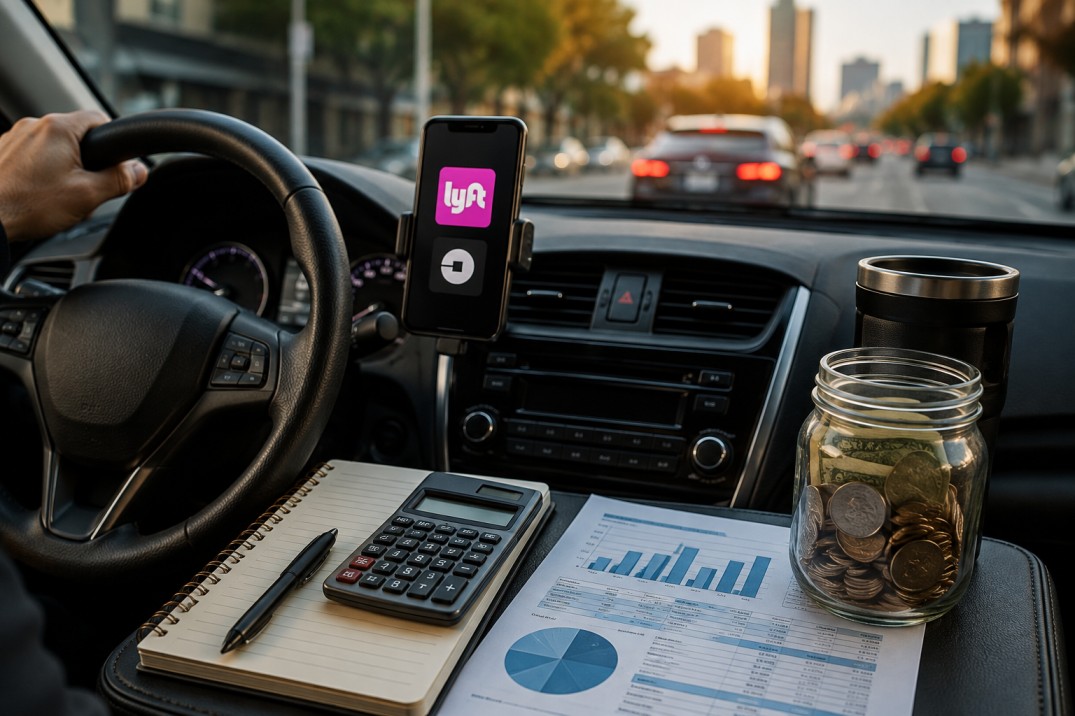
Driving for Lyft or another rideshare platform can give you something many traditional jobs don’t: flexibility. You can choose when to work, fit driving around other commitments, and potentially increase your income when demand is high.
But there’s another side to that flexibility. Your earnings can change from one week to the next, while expenses such as fuel, insurance, vehicle maintenance and unexpected repairs don’t necessarily wait for a good earning week.
That’s why financial planning matters for all rideshare drivers, whether you drive a few evenings a week or spend most of your working hours behind the wheel. A little preparation can make slow periods and surprise expenses much easier to handle.
Know Where Your Money Is Going
The first step in financial planning is surprisingly simple: understand your actual numbers.
It’s easy to look at your rideshare earnings and think, “I made £200 today, so I’m doing pretty well.” But that figure doesn’t tell the whole story. Fuel, vehicle upkeep, insurance, taxes and other driving-related costs can take a meaningful bite out of your income.
Try tracking your income and expenses regularly. You don’t need an elaborate spreadsheet if that feels like too much work. A basic notes app, budgeting app or notebook can be enough to get started.
Separate your expenses into categories such as:
- Fuel and charging costs
- Vehicle servicing and repairs
- Insurance
- Phone and data costs
- Parking and tolls
- Taxes and other work-related obligations
- Personal household expenses
Once you can see where your money is going, it becomes much easier to spot areas where you can cut unnecessary spending.
Build Your Budget Around Your Lowest-Earning Weeks
One of the biggest challenges for rideshare drivers is unpredictable income.
Some weeks may be excellent. Perhaps there’s a busy holiday weekend, a local event or unusually strong demand. Other weeks can be much quieter.
Rather than building your lifestyle around your best weeks, consider creating a basic budget around a conservative estimate of your regular earnings. That way, a slower week doesn’t automatically turn into a financial crisis.
For example, if your weekly income varies considerably, look at several months of earnings and identify a realistic lower-end average. Use that figure when planning essential expenses.
When you earn more than expected, you can direct some of the difference towards savings, upcoming vehicle costs or other financial priorities.
It might not feel exciting at first, but this approach can give you breathing room when demand suddenly drops.
Keep an Emergency Fund for Vehicle Problems
For rideshare drivers, the car isn’t simply transportation. It’s part of the income-producing equipment.
That makes unexpected vehicle problems particularly stressful.
A flat tyre, battery problem, brake repair or more serious mechanical issue can potentially mean two problems at once: you have a bill to pay and you may temporarily be unable to earn.
Even a modest emergency fund can help reduce that pressure. Start with an amount that feels achievable rather than waiting until you can save a large sum.
You might set aside a small percentage of every week’s rideshare income. During stronger earning periods, consider putting a little more into the fund.
The important thing is consistency.
Create Separate Savings Pots
Keeping all your money in one account can make budgeting confusing. You may see a healthy balance and assume the money is available, only to remember later that part of it needs to cover an upcoming expense.
Consider creating separate savings categories for different purposes.
One could be your vehicle fund. Another could cover taxes or other predictable obligations. A third could be your general emergency fund.
This doesn’t necessarily mean opening several bank accounts. You can also use labelled savings goals or a simple budgeting system.
The idea is to give each portion of your money a job.
Plan for Slow Driving Periods
Demand can change because of weather, holidays, local events, seasonal patterns or broader economic conditions. That’s one reason rideshare drivers shouldn’t assume that today’s earnings will continue indefinitely.
When you have a particularly strong week, resist the temptation to immediately increase your spending.
Instead, ask yourself: “If I earned considerably less next week, would my essential bills still be covered?”
If the answer is no, that extra income may be better directed towards your emergency savings.
A financial cushion gives you more options. You don’t have to panic when things slow down, and you may be less tempted to take on expensive debt simply to cover an ordinary shortfall.
Understand Your Tax Responsibilities
Taxes can catch self-employed and gig-economy workers off guard, especially when income arrives throughout the year rather than through a traditional payroll system.
Keep accurate records of your rideshare earnings and eligible business expenses. Set aside money regularly rather than waiting until a tax payment is due.
Because tax rules vary depending on where you live and your circumstances, it’s worth checking current guidance from the relevant tax authority or speaking with a qualified tax professional.
Good records can also help you understand how much you’re actually earning after work-related expenses.
Don’t Ignore Vehicle Depreciation
Fuel is usually one of the most visible driving expenses, but your vehicle has another cost that’s easy to overlook: depreciation.
The more miles you put on a car, the more wear it experiences and the more maintenance it may eventually require. A vehicle that is used heavily for rideshare work can face considerably more wear than one used only occasionally.
When calculating your true earnings, remember that the money left after fuel isn’t necessarily your final profit.
Setting aside something for future maintenance and vehicle replacement can prevent a nasty surprise later.
What If an Unexpected Bill Arrives?
Even with careful planning, emergencies happen.
Maybe your vehicle needs an urgent repair. Perhaps an essential household bill arrives at an inconvenient time, or you have a gap between when an expense is due and when your next rideshare earnings arrive.
This is where having a financial backup plan becomes particularly important.
Your first option may be to use your emergency savings. If that isn’t enough, consider whether you can reduce or delay non-essential spending, pick up additional driving hours when practical, or access other lower-cost sources of funds.
For drivers who have exhausted those options, researching emergency cash for Lyft drivers can provide another avenue to consider. However, any form of short-term borrowing should be approached carefully. Look at the total repayment amount, fees, interest or other charges, payment schedule and consequences of missing a payment before agreeing to anything.
The cheapest-looking option isn’t always the cheapest once all costs are included.
Borrowing Should Be a Backup, Not a Budget
There’s an important distinction between using emergency finance occasionally and relying on borrowed money to cover everyday living costs.
If you regularly need to borrow simply to make it through each month, that may be a sign that your current budget needs attention.
Before taking out any form of short-term finance, ask yourself a few straightforward questions:
- How much do I actually need?
- When can I realistically repay it?
- What will the total cost be?
- Are there additional fees?
- What happens if my income is lower than expected?
- Is there a less expensive alternative?
These questions can feel slightly uncomfortable, especially when a bill is sitting in front of you. Still, taking a few minutes to understand the numbers can prevent a difficult situation from becoming even harder.
Make Your Income Work Harder
Financial planning isn’t only about cutting costs. It’s also about making sensible use of the income you already generate.
Look at your driving patterns. Are there particular times or areas where demand tends to be stronger? Are you spending too much time driving without passengers? Could you reduce unnecessary mileage between rides?
Your own records can reveal useful patterns.
For instance, if you discover that certain hours consistently produce weaker earnings after accounting for fuel and time, you might adjust your schedule. Likewise, stronger periods could be opportunities to put extra money towards savings.
Just remember that chasing higher gross earnings doesn’t necessarily mean higher profits. More driving also means more fuel, mileage and vehicle wear.
Review Your Finances Every Month
You don’t need to spend an entire weekend analysing your finances.
Set aside a short amount of time each month to review your numbers. Check your total income, essential spending, driving expenses, savings and any outstanding debts.
Then ask yourself:
“What worked this month?”
“What caught me by surprise?”
“What should I change next month?”
That simple habit can make your financial decisions much more deliberate.
Over time, you’ll also get a clearer idea of how much you genuinely need to earn each week to cover your essential commitments.
Give Yourself More Than One Safety Net
The strongest financial plan isn’t based on one solution.
Ideally, rideshare drivers can build several layers of protection: a realistic budget, regular savings, a vehicle maintenance fund, good records and a plan for handling temporary income gaps.
Emergency borrowing can potentially be one part of that wider plan, but it shouldn’t replace savings or sound budgeting.
Think of it like keeping a spare tyre in your car. You hope you never need it, but you’re much more comfortable knowing there’s a backup if something goes wrong.
Final Thoughts
Rideshare driving can offer valuable flexibility, but flexible income requires flexible financial planning too.
The goal isn’t to predict exactly what you’ll earn every week. That’s rarely realistic. Instead, it’s about preparing for the weeks when things don’t go according to plan.
Track your real expenses. Build savings gradually. Prepare for vehicle repairs. Keep an eye on taxes and other obligations. And if an unexpected expense leaves you considering short-term finance, understand the full cost before making a decision.
To be honest, good financial planning isn’t about having everything perfectly organised. It’s about giving yourself options when life throws an unexpected bill your way.
Frequently Asked Questions
How much should a rideshare driver save for emergencies?
There’s no single amount that works for everyone because income, expenses and household circumstances vary. Start with an achievable savings target and build it gradually. Even a small reserve can be useful when an unexpected expense appears.
What are the biggest expenses for Lyft and rideshare drivers?
Common costs include fuel, insurance, vehicle maintenance, repairs, depreciation and phone expenses. Taxes and other work-related costs can also affect your actual take-home income.
Should I use my emergency fund for car repairs?
If the repair is necessary for you to continue working and you have enough savings available, that can be one reasonable use of an emergency fund. Afterward, consider rebuilding the amount so you’re prepared for the next unexpected expense.
Is short-term borrowing suitable for rideshare drivers?
It depends on the individual’s circumstances. Before borrowing, compare the total repayment cost with other available options and make sure you understand the payment terms. Borrowing should be approached as a carefully considered backup rather than a routine way to cover regular expenses.
How can rideshare drivers prepare for slow weeks?
A conservative budget can help. Track your earnings over several months, identify a realistic lower-income figure and avoid increasing regular spending simply because you have a strong week. Extra income can be directed towards savings and upcoming expenses.
Why is vehicle maintenance important for financial planning?
Your vehicle is closely connected to your ability to earn. Regular maintenance may help reduce the risk of unexpected breakdowns and can make future costs easier to anticipate. Setting aside money for maintenance is therefore an important part of a rideshare driver’s financial plan.


Leave a Reply